
Herman Melville’s Moby Dick is not just a tale of a vengeful captain and a giant whale; it is an epic exploration of human obsession, the relentless power of nature, and the deep, philosophical questi...
Herman Melville’s Moby Dick is not just a tale of a vengeful captain and a giant whale; it is an epic exploration of human obsession, the relentless power of nature, and the deep, philosophical questions surrounding existence. The dialogue and narration are packed with some of the most profound and unsettling insights in American literature, offering timeless wisdom on ambition, madness, and destiny.
Quotes on Obsession, Vengeance, and Captain Ahab's Madness
"All men live enveloped in Moby Dick. All are born with halters round their necks; but it is only when caught in the swift, sudden turn of death, that mortals catch the fleeting idea of the great whale’s tail, only then do they perceive, with almost intolerable distinctness, the full horror of the hopeless fatality of all things."
Author: Herman Melville
Benefit: Highlights the universal nature of hidden doom and the inevitability of fate, suggesting that life itself is bounded by inescapable forces.
"I am madness maddened!"
Author: Herman Melville
Benefit: A succinct declaration of Ahab's complete surrender to his destructive obsession, illustrating the danger of unchecked fixation.
"Ahab stands alone among the human race. He is the master of his soul."
Author: Herman Melville
Benefit: Reflects Ahab's isolation and his powerful, yet ultimately tragic, will, emphasizing the lonely nature of absolute authority.
"Moby Dick seeks thee not. It is thou, thou, that madly seekest him!"
Author: Herman Melville
Benefit: A critical reminder that many battles we fight are self-initiated and driven by internal, rather than external, necessity.
"To know how to dissemble is to know how to reign."
Author: Herman Melville
Benefit: A cynical observation on leadership, suggesting that effective governance often relies on strategic concealment and manipulation.
"There is no folly of the beast of the earth which is not infinitely outdone by the folly of man."
Author: Herman Melville
Benefit: A humbling perspective on human nature, asserting that our capacity for irrationality far exceeds that of the animal kingdom.
"All my means are sane, my motive and my object mad."
Author: Herman Melville
Benefit: Captures the tragic contradiction of the obsessed mind: executing rational steps toward an irrational goal.
"The white whale is my sworn foe!"
Author: Herman Melville
Benefit: Simplifies Ahab's consuming hatred into a singular, defining purpose, illustrating the simplification of life through revenge.
"Gifted with the high perception, I lack the low, enjoying power; damned, most subtly and most malignantly."
Author: Herman Melville
Benefit: A reflection on the burden of acute awareness when coupled with an inability to find simple happiness or contentment.
"Swerve me? The path to my fixed purpose is laid with iron rails, whereon my soul is grooved to run."
Author: Herman Melville
Benefit: Emphasizes the immovable nature of Ahab's resolve, showing how obsession creates a predetermined, inescapable trajectory.
Philosophical Insights on Existence, Nature, and Destiny
"Ahab's quenchless feud seemed to have a half-crazy bearing. Yet the madman was just as much a member of the crew as the sane man."
Author: Herman Melville
Benefit: Discusses the fine line between sanity and madness, especially when driven by a shared, albeit dark, purpose.
"Call me Ishmael."

Author: Herman Melville
Benefit: The iconic opening line, establishing the narrator's sense of displacement, anonymity, and his role as an eternal observer.
"It is not the white hair, nor the wrinkles, which discover the old man, but the hollowness of the soul."
Author: Herman Melville
Benefit: Provides a deep definition of aging, focusing on spiritual depletion rather than mere physical decay.
"Why is it that, in spite of the distresses of the dentist, no patient is ever satisfied at not being made to suffer half again as much as he expected?"
Author: Herman Melville
Benefit: A darkly humorous observation on human psychology and our tendency to accept, and perhaps even demand, expected suffering.
"There are two things I am perpetually looking for: the beginning and the end."
Author: Herman Melville
Benefit: Highlights the fundamental human quest for understanding origin and ultimate destiny, crucial themes in epic literature.
"I try all things; I achieve what I can."
Author: Herman Melville
Benefit: A pragmatic motto for ambitious endeavor, balancing lofty goals with realistic limits of human capability.
"Ignorance is the parent of fear."
Author: Herman Melville
Benefit: A timeless psychological truth asserting that lack of knowledge or understanding is the root cause of anxiety and dread.
"Grief allayed is grief awaked."
Author: Herman Melville
Benefit: Suggests that temporary relief from sorrow often leads to a harsher reawakening of the underlying pain.
"The sea had jeeringly kept his finite body up, but drowned the infinite of his soul."
Author: Herman Melville
Benefit: A metaphor for spiritual death occurring while the physical body persists, emphasizing existential despair.
"The truest of all men was the Man of Sorrows, and the truest of all books is Solomon’s, where the preacher says, ‘all is vanity.’"
Author: Herman Melville
Benefit: Provides a stark, nihilistic view, equating profound spiritual truth with the recognition of life’s ultimate futility.
The Ocean, Brotherhood, and the Human Condition
"Better sleep with a sober cannibal than a drunken Christian."
Author: Herman Melville
Benefit: A challenging statement about appearances and reality, valuing authentic reliability over hypocritical piety.
"Look not too long in the face of the fire, O man! One's hair is soon singed, and there's no cooling that."
Author: Herman Melville
Benefit: A warning against becoming too engrossed in dangerous passions or philosophical depths that threaten one's stability.
"Though in many of its aspects this visible world seems formed in love, the invisible spheres were formed in fright."
Author: Herman Melville
Benefit: Contemplates the duality of existence, contrasting the apparent beauty of the visible world with the terrifying mystery of the unknown spiritual realm.
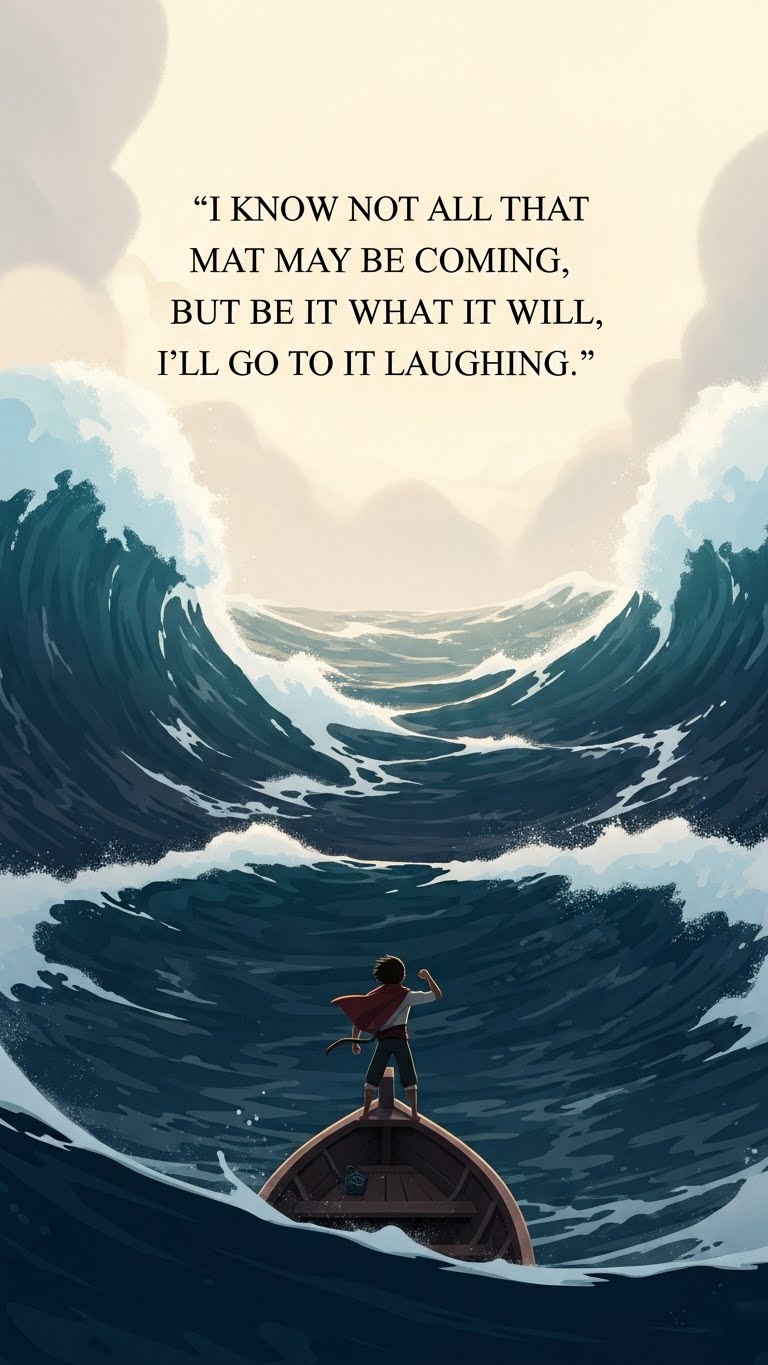
"As for me, I am tormented with an everlasting itch for things remote."
Author: Herman Melville
Benefit: Captures the restlessness and desire for exploration that drives many characters, particularly Ishmael, to seek the unknown.
"O, Tars! 'Twas not so hard a thing as Moby Dick to find a coffin-case so handy!"
Author: Herman Melville
Benefit: Illustrates the constant proximity of death in the whaling life, where morbid tools become casual conveniences.
"The ocean is in the soul of man."
Author: Herman Melville
Benefit: Suggests that the vast, powerful, and mysterious nature of the sea mirrors the depth and complexity of human inner life.
"The whole act of whaling seems like one continuous disaster."
Author: Herman Melville
Benefit: Summarizes the perilous reality of their profession, emphasizing risk and hardship as core components of life at sea.
"There is a wisdom that is woe; but there is a woe that is madness."
Author: Herman Melville
Benefit: Distinguishes between the painful knowledge (wisdom) that comes from experience and the destructive suffering that leads to insanity.
"For be a man’s perils what they may, he will not willingly submit to the consciousness of his own most pitiable helplessness."
Author: Herman Melville
Benefit: Explains the fierce human resistance to admitting vulnerability or lack of control, driving behaviors like Ahab’s.
"It is better to be in peril with a good man, than in security with a bad one."
Author: Herman Melville
Benefit: Prioritizes companionship and moral character over physical safety, highlighting the value of trustworthy brotherhood.
"Man’s insanity is heaven’s sense."
Author: Herman Melville
Benefit: A deeply philosophical paradox suggesting that what seems mad from a mortal perspective might align with a higher, divine logic.
"But Faith, like a jackal, feeds upon the carcasses of doubts."
Author: Herman Melville
Benefit: A striking metaphor defining faith not as pure belief, but as something that thrives specifically by consuming and overcoming persistent skepticism.
"The sea is the image of the ungraspable phantom of life; and this is the key to it all."
Author: Herman Melville
Benefit: Identifies the sea as the central metaphor for the elusive, incomprehensible nature of existence itself.
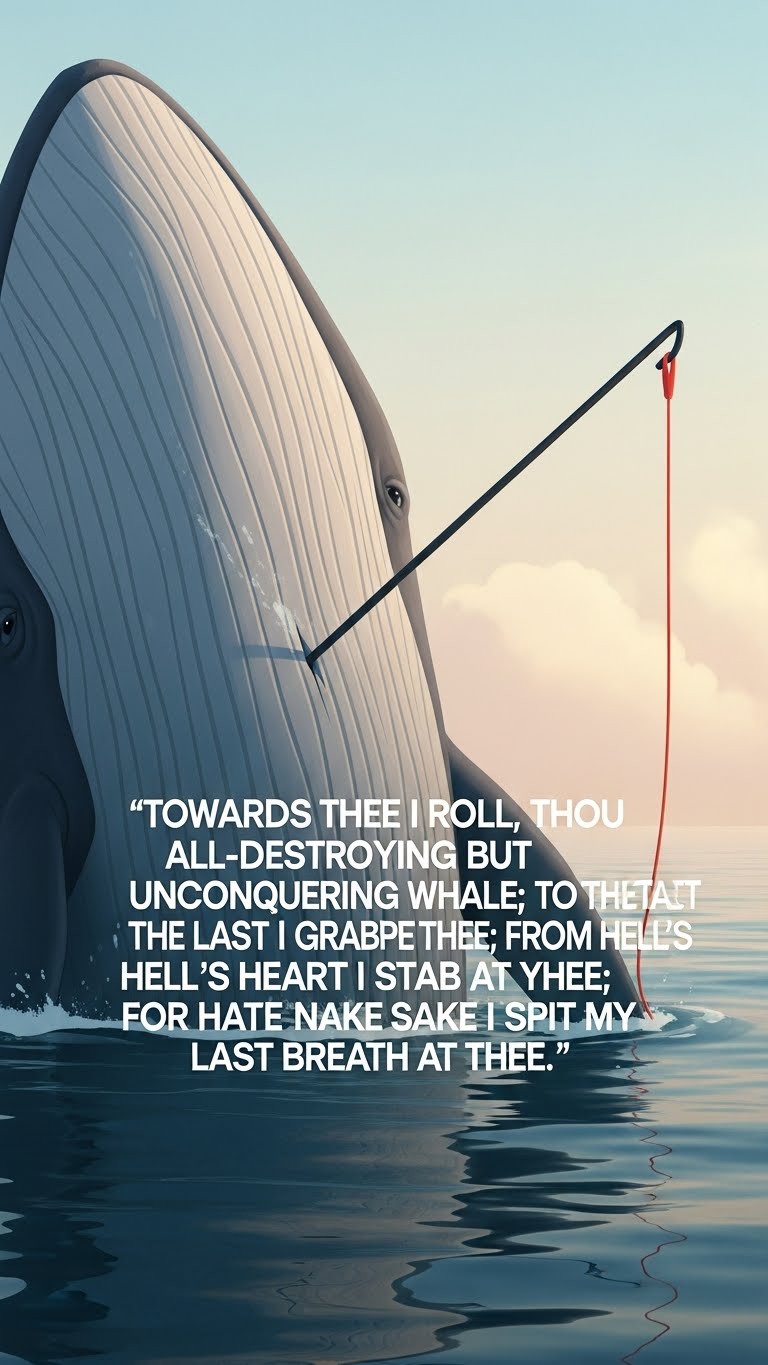
"How small the chances are that we mortals shall ever fathom the great mystery!"
Author: Herman Melville
Benefit: Expresses profound humility regarding the limits of human knowledge and the difficulty of solving ultimate metaphysical questions.
"Not the white whale, but the white whale’s insult is what torments me."
Author: Herman Melville
Benefit: Clarifies that Ahab’s true motivation is wounded pride and perceived affront, not merely physical damage, turning the conflict into a spiritual war.
The language of Moby Dick continues to resonate because it addresses the deepest conflicts of the human spirit: the fight against fate, the allure of destructive ambition, and the search for meaning in a vast, indifferent universe. These quotes offer potent reminders that the true voyage is always inward, charting the depths of one's own soul against the backdrop of an endless ocean.
KEEP READING
40 Quotes: Unlocking the Meaning Behind the Words
Quotes are condensed wisdom. Dive into 40 profound sayings and uncover what these powerful words truly mean for success, motivation, and daily life, transforming simple words into actionable guidance.
Inspiration & LeadershipMaking History: 40 Quotes on Well Behaved Women
Explore the empowering meaning behind the phrase "well behaved women rarely make history" and discover 40 inspiring quotes about courage, leadership, and breaking barriers for profound impact.