
Elie Wiesel's "Night" is a haunting testament to the darkest chapter in human history. Through powerful imagery and stark simplicity, Wiesel captures the devastating loss of innocence and faith in the...
Elie Wiesel's "Night" is a haunting testament to the darkest chapter in human history. Through powerful imagery and stark simplicity, Wiesel captures the devastating loss of innocence and faith in the concentration camps. These profound quotes serve as necessary reminders of history, resilience, and the fragile nature of humanity, demanding that we never forget the lessons learned in the shadows.
Quotes on Faith, Silence, and God
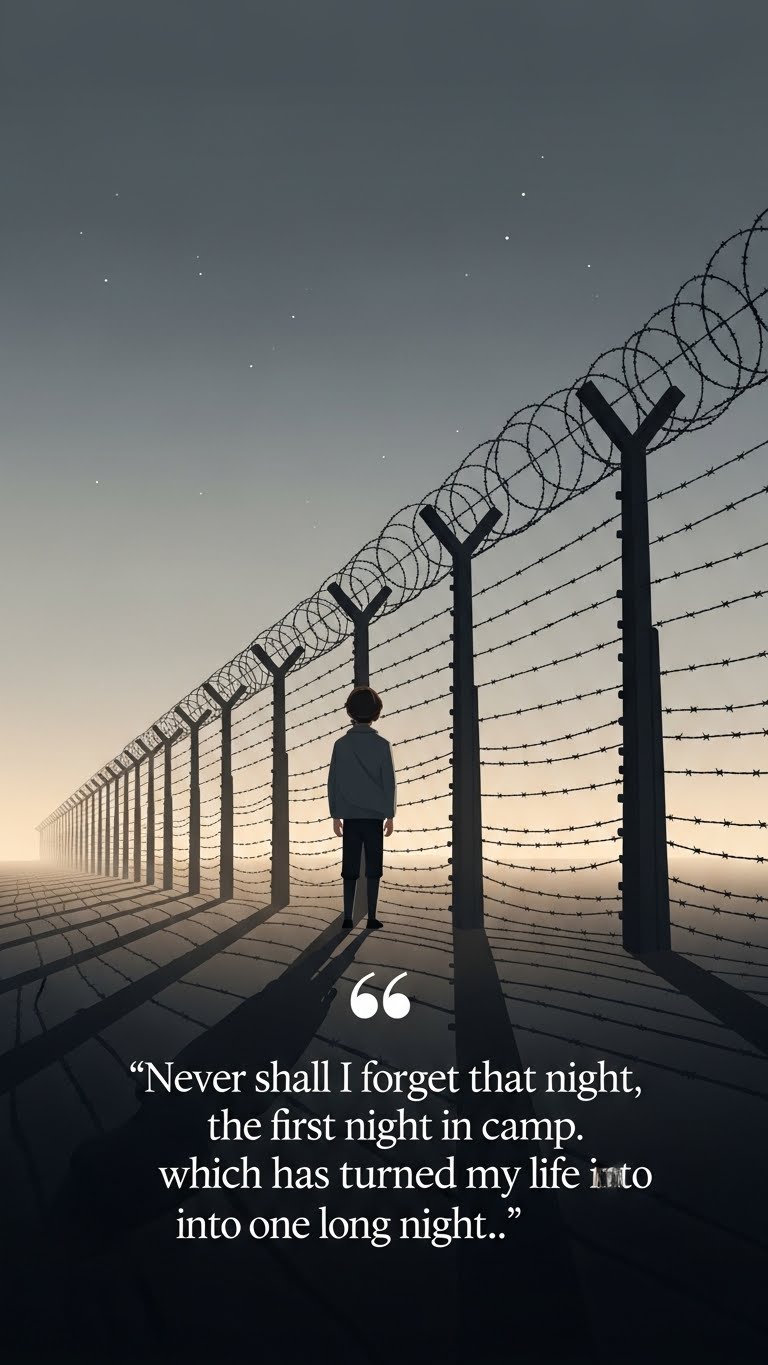
"Never shall I forget that night, the first night in camp, which has turned my life into one long night, seven times sealed."
Author: Elie Wiesel
Benefit: This quote immediately establishes the enduring trauma and life-altering impact of the Holocaust experience on the narrator's soul.
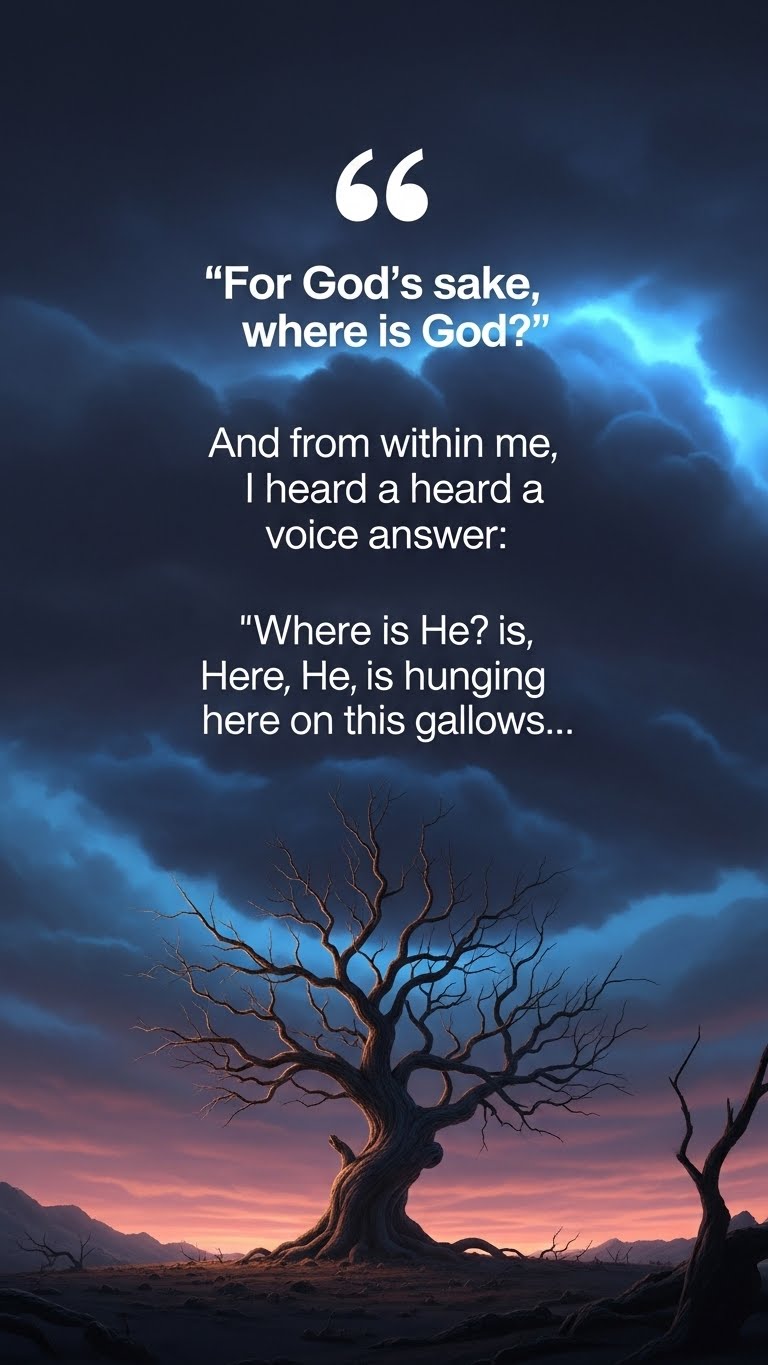
"Where is God now?" And I heard a voice within me answer him: "Where is He? Here He is—He is hanging here on this gallows..."
Author: Elie Wiesel
Benefit: Captures the moment of profound spiritual crisis and the death of faith witnessed through the execution of the young boy.
"I did not fast. First of all, to please my father who had forbidden me to do so. And then, there was no longer any reason for me to fast. I no longer accepted God's silence."
Author: Elie Wiesel
Benefit: Demonstrates the symbolic rejection of traditional religious practice in the face of unspeakable cruelty and divine silence.
"We were the masters of nature, the masters of the world. We had forgotten everything—death, fatigue, our natural needs. Stronger than cold or hunger, stronger than the shots and the desire to die, doomed to live, we went on."
Author: Elie Wiesel
Benefit: Reflects the primal, almost superhuman endurance required for survival under conditions designed to destroy the human spirit.
"I shall never forget the faces of the children, whose bodies turned into smoke beneath a silent blue sky."
Author: Elie Wiesel
Benefit: A crucial image highlighting the sheer horror of the crematoria and the innocence lost in the Holocaust.
"The world is not interested in us. Today, everything is possible, even the crematoria..."
Author: Elie Wiesel
Benefit: Expresses the devastating realization that the outside world was indifferent to their suffering and fate.
"Man questions God and God answers. But we have to learn to understand His answers. We have to learn to understand His silence."
Author: Elie Wiesel
Benefit: Though spoken earlier by Moishe the Beadle, this concept frames the narrator’s ultimate struggle with faith amidst the camp’s atrocities.
"The look in his eyes, as they stared into mine, has never left me."
Author: Elie Wiesel
Benefit: Emphasizes the lasting psychological scar and the indelible memory of witnessing the suffering of others.
"Sleep fled from my eyes. What use was it to sleep? For two weeks, I had been in the Block of the 'Muselmänner,' the dead men, the children of the night."
Author: Elie Wiesel
Benefit: Illustrates the deep depression and dehumanization suffered by those who had given up the will to live.
"I have lost my faith entirely."
Author: Elie Wiesel
Benefit: A stark and powerful statement summarizing the irreversible destruction of religious certainty caused by the atrocities witnessed.
"I was nothing but a body. Perhaps even less: a famished stomach."
Author: Elie Wiesel
Benefit: Perfectly encapsulates the state of dehumanization where existence is reduced solely to basic, agonizing physical needs.
"We were masters of the universe, the princes of the Jewish faith, and here we were, condemned to suffer, to die."
Author: Elie Wiesel
Benefit: Highlights the cruel irony of their previous elevated status contrasted with their current abject misery and vulnerability.
Loss of Innocence and Humanity
"The idea of dying, of ceasing to be, began to fascinate me."
Author: Elie Wiesel
Benefit: Reveals the deep psychological toll, where death becomes a tempting escape from unbearable pain.
"From the depths of the mirror, a corpse gazed back at me. The look in his eyes, as they stared into mine, has never left me."
Author: Elie Wiesel
Benefit: The chilling closing lines, signifying the absolute loss of self and the internal death experienced by the narrator.
"We forget. We are afraid to forget."
Author: Elie Wiesel
Benefit: Though brief, this statement addresses the tension between the need to suppress pain and the moral obligation to remember.
"He had felt his father growing weaker and, believing that the end was near, had thought by free himself of a burden."
Author: Elie Wiesel
Benefit: A tragic example of the breakdown of family bonds and the ultimate test of loyalty under extreme duress.
"Our first act as free men was to throw ourselves onto the provisions. We thought only of that. Not of revenge, not of our parents. Only of bread."
Author: Elie Wiesel
Benefit: Illustrates how survival stripped away higher human concerns, leaving only the animalistic drive for sustenance.
"I told him that I did not believe that they could burn people in our age, that humanity would never tolerate it..."
Author: Elie Wiesel
Benefit: Shows the initial naive disbelief and the shattered faith in human civilization before the true horror was revealed.
"Humanity? Humanity is not concerned with us. Since Auschwitz, everything is possible."
Author: Elie Wiesel
Benefit: A chilling realization that the accepted moral and political order had utterly collapsed, allowing unimaginable atrocities.
"It was not the first time that I had seen a man's tears. But these were different. These were the tears of a child, who had never wept before."
Author: Elie Wiesel
Benefit: Highlights the sudden and total shattering of childhood innocence under the pressure of the camps.
"Moishe the Beadle, the man who had escaped death and come back to warn them, was ignored, a fate worse than death itself."
Author: Elie Wiesel
Benefit: A commentary on the tragic human tendency toward willful blindness and denial in the face of clear danger.
"I had not realized that a simple tear, a single tear, could carry so much weight."
Author: Elie Wiesel
Benefit: Underscores the emotional suppression required for survival, where even minor displays of emotion felt monumental.
"The night was growing darker, but I could not bring myself to pray."
Author: Elie Wiesel
Benefit: Symbolizes the fading light of hope and spirituality as the physical and emotional darkness consumes the protagonist.
"There are a thousand and one doors allowing entry into the absolute, the absolute of suffering."
Author: Elie Wiesel
Benefit: A metaphorical explanation of the multifaceted ways cruelty and pain manifested in the concentration camp system.
"Every man for himself! An atmosphere of tension enveloped us. We were no longer afraid of death; we were afraid of being left behind."
Author: Elie Wiesel
Benefit: Shows how the struggle for survival degraded social cohesion, making self-preservation the highest priority.
Memory, Survival, and Witnessing
"To forget would be not only dangerous but offensive; to forget the dead would be akin to killing them a second time."
Author: Elie Wiesel
Benefit: Articulates the fundamental moral imperative behind writing the memoir: preserving the memory of the victims.
"He was forced to dig his own grave. And then, he stood and watched as his wife and children were murdered."
Author: Elie Wiesel
Benefit: A specific, brutal example used by Moishe the Beadle to convey the barbaric nature of the atrocities.
"In this place, there is no such thing as father, brother, friend. Everyone lives and dies for himself alone."
Author: Elie Wiesel
Benefit: Describes the destructive individualism forced upon the prisoners, eroding basic relationships and empathy.
"If only I could have found some corner in which to weep without being seen..."
Author: Elie Wiesel
Benefit: Highlights the necessity of hiding vulnerability and emotion in a place where weakness meant death.
"The only thing that kept me alive was the determination to stay with my father."
Author: Elie Wiesel
Benefit: Identifies the profound motivation for survival—the essential bond between father and son.
"How could I forget that evening, that day, that night?"
Author: Elie Wiesel
Benefit: Rhetorically emphasizes the impossibility of erasing the memory of the initial selection and arrival.
"A terrible word began to dog our steps: Selection."
Author: Elie Wiesel
Benefit: Captures the fear and arbitrary cruelty associated with the process of determining who lived and who died.
"I wanted to run away, but my feet were nailed to the floor."
Author: Elie Wiesel
Benefit: Expresses the paralyzing fear and helplessness felt in moments of intense danger or emotional shock.
"We were dried up trees in the middle of a desert."
Author: Elie Wiesel
Benefit: A poignant metaphor illustrating the complete depletion of life and hope among the prisoners.
"Do not rejoice in my suffering. Do not rejoice in my death. Rejoice in my testimony."
Author: Elie Wiesel
Benefit: An imagined instruction, emphasizing that the value lies not in the pain endured, but in the truth revealed through the narrative.
The words contained within "Night" are more than just historical records; they are urgent moral imperatives. By reflecting on these powerful quotes from Elie Wiesel, we commit to honoring the memory of those lost and ensuring that the silence of indifference never again prevails. This profound testimony serves as an eternal warning about the dangers of hatred and the sacred duty of witnessing.
KEEP READING
37 Profound Quotes from Elie Wiesel's Night
Explore 37 powerful and moving quotes from Elie Wiesel's pivotal memoir, Night, focusing on themes of lost faith, survival, and the profound duty of memory.
Motivation & Inspiration40 Quotes: Unlocking the Meaning Behind the Words
Quotes are condensed wisdom. Dive into 40 profound sayings and uncover what these powerful words truly mean for success, motivation, and daily life, transforming simple words into actionable guidance.