John Steinbeck’s Of Mice and Men is a timeless study of human isolation, companionship, and the fragility of the American Dream. The novel’s power lies not only in its narrative but in the vivid, spar...
George and Lennie: The Central Pair
"Small and quick, dark of face, with restless eyes and sharp, strong features."
Author: George
Benefit: Introduces George's defining characteristics: alertness, quick wit, and physical compactness, fitting his role as the leader.
"Every part of him was defined: small, strong hands, slender arms, a thin and bony nose."
Author: George
Benefit: Emphasizes his defined, focused nature, serving as a stark physical contrast to Lennie.
"A huge man, shapeless of face, with large, pale eyes, and wide, sloping shoulders; and he walked heavily, dragging his feet a little, the way a bear drags his paws."
Author: Lennie
Benefit: Establishes Lennie's immense size, intellectual clumsiness, and strong connection to animal imagery.
"He wore blue jeans and a short denim jacket. And in the winter he wore a coat of three seasons called a mackinaw and a black, shapeless hat."
Author: Lennie
Benefit: Describes his simple, functional, yet slightly ill-fitting ranch attire, reflecting his lack of personal care.
"Behind him walked his opposite, a huge man, shapeless of face, with large, pale eyes."
Author: Lennie
Benefit: Reinforces the physical dichotomy between the two central characters, highlighting their dependence on each other.
"Lennie, who had been struggling half-drowned, stopped his frantic splashing and set his head up."
Author: Lennie
Benefit: Illustrates his struggle with simple survival tasks, underscoring his intellectual deficit.
"He’s jes’ like a kid. There ain’t no more harm in him than a kid."
Author: George (describing Lennie)
Benefit: Characterizes Lennie's innocent, childlike mindset, which tragically conflicts with his massive strength.
"He was too dumb even to know he was in trouble."
Author: Lennie
Benefit: Describes his fundamental lack of awareness and inability to grasp consequences or danger.
"George stared at the water, his dark eyes brooding."
Author: George
Benefit: Highlights George's deep contemplation and persistent anxiety regarding their shared future and responsibilities.
"His voice was tight with control."
Author: George
Benefit: Shows George's constant internal tension and the effort required to manage Lennie and their precarious situation.
"A big baby, that’s all he is."
Author: Lennie
Benefit: A simplified, blunt summary of Lennie's character, emphasizing the tragic gap between his physical body and his mental age.
Slim and Candy: Wisdom and Experience
"A tall man stood in the doorway. He held a crushed Stetson hat under his arm. He moved with a majesty achieved only by royalty and master craftsmen."
Author: Slim
Benefit: Establishes Slim's immediate, natural authority and the respect he commands without effort.
"His hands, large and lean, were as delicate in their action as those of a temple dancer."
Author: Slim
Benefit: Highlights the impressive blend of immense physical strength and precise skill in his work as a jerkline skinner.
"There was a gravity in his manner and a quiet so profound that all talk stopped when he spoke."
Author: Slim
Benefit: Describes the immense moral authority and emotional wisdom he wields over the other ranch workers.
"He was a jerkline skinner, the prince of the ranch."
Author: Slim
Benefit: Defines both his high-skilled profession and his elevated, almost god-like status among the laborers.
"A tall, stoop-shouldered old man came in. He was dressed in blue jeans and carried a big push broom."
Author: Candy
Benefit: Physical description establishing his age, function as the swamper, and general air of weariness.
"He had no hand, and he had a round stick for a wrist."
Author: Candy
Benefit: The most defining characteristic: his permanent physical disability, symbolizing his economic vulnerability and impending uselessness.
"The old man’s eyes followed the sound until it reached the door, and there he dropped his head and looked down at the floor."
Author: Candy
Benefit: Illustrates his defeated posture and deep sadness regarding the necessary death of his old dog, mirroring his own fears of obsolescence.
"He scratched the white stubble on his cheek vaguely."
Author: Candy
Benefit: Details his aging, neglected appearance and his slow, contemplative, often passive nature.
"When they can me here I wisht somebody’d shoot me."
Author: Candy
Benefit: Expresses the fear and vulnerability associated with being a disabled, aging worker in a merciless economic environment.
Crooks, Curley, and the Woman: Isolation and Conflict
"He was a Negro stable buck, and he had a crooked back where a horse had kicked him."
Author: Crooks
Benefit: Defines his race, occupation, and painful physical impairment, setting the scene for his extreme social isolation.
"His body was bent over to the left by his crooked spine, and his eyes lay deep in his head, and bare black hair straggled down over his forehead."
Author: Crooks
Benefit: Provides a detailed, poignant look at his physical deformation, resulting from injustice and injury.
"He kept his distance and demanded that other people keep theirs."
Author: Crooks
Benefit: Describes his proud, self-imposed isolation, developed as a defense mechanism against persistent prejudice and mistreatment.
"He had books, too; a tattered dictionary and a mauled copy of the California civil code."
Author: Crooks
Benefit: Reveals his intellectual depth and legal awareness, contrasting sharply with his low social standing.
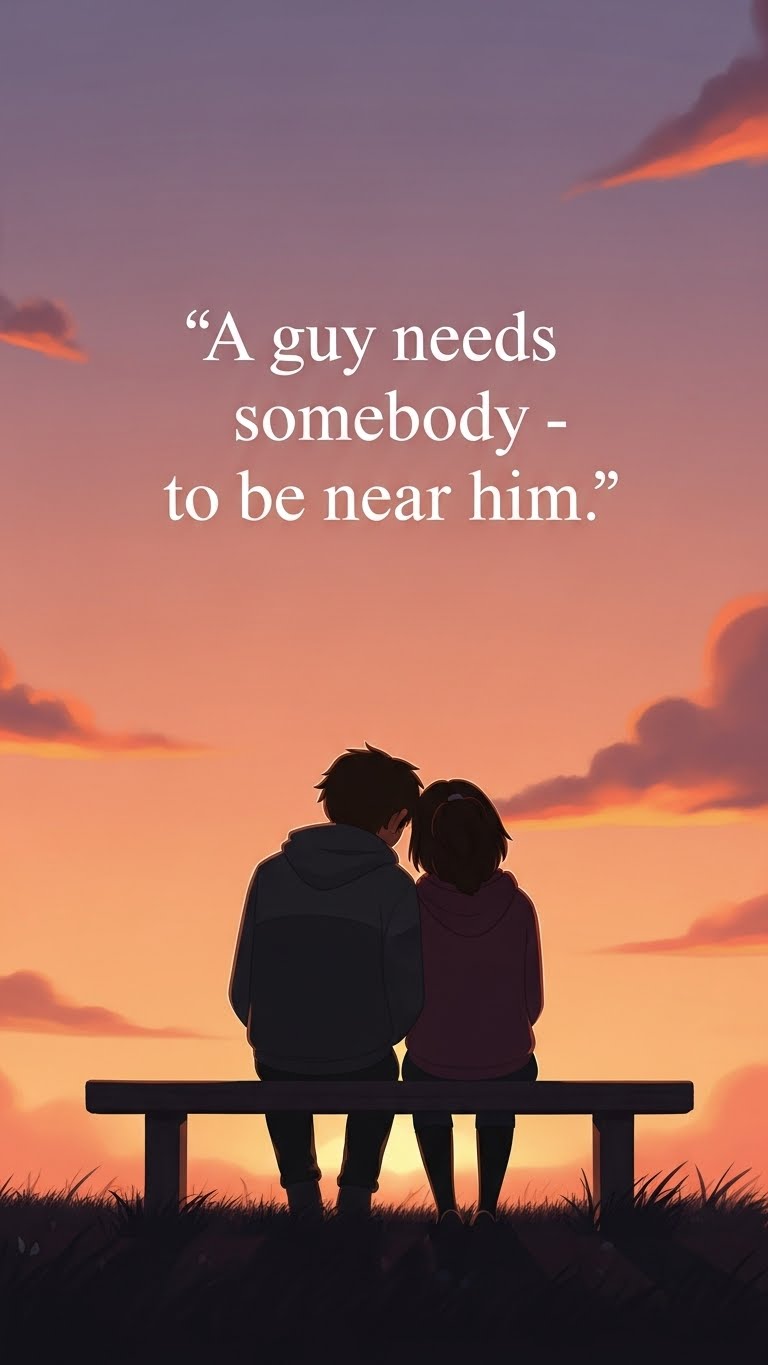
"A guy needs somebody—to be near him. A guy goes nuts if he ain’t got nobody."
Author: Crooks
Benefit: Captures the psychological suffering caused by his forced isolation, defining his character through loneliness.
"A thin young man with a brown face, brown eyes, and a head of tightly curled hair."
Author: Curley
Benefit: A straightforward physical description of the boss's son, quickly establishing his nervous energy.
"He wore a work glove on his left hand, and like the boss, he wore high-heeled boots."
Author: Curley
Benefit: Symbolizes his attempt to assert authority and differentiate himself physically and socially from the working hands.
"His glance was calculating and pugnacious."
Author: Curley
Benefit: Highlights his inherently aggressive, ready-to-fight demeanor and distrustful personality.
"She had full, rouged lips and wide-spaced eyes, heavily made up."
Author: Curley's Wife
Benefit: Details her overly sexualized, artificial appearance, intended to draw attention in a desolate environment.
"Her finger nails were red."
Author: Curley's Wife
Benefit: A simple detail emphasizing her deliberate use of vivid color to draw attention to herself, suggesting flirtation and danger.
"She wore a cotton house dress and red mules, on the insteps of which were little bouquets of red ostrich feathers."
Author: Curley's Wife
Benefit: Describes her inappropriate, flashy attire for a ranch, signaling her desperation for visibility and human contact.
"She was suddenly all body and no face."
Author: Curley's Wife
Benefit: Captures the men's dismissive, objectifying perception of her as purely a physical object, erasing her individuality and inner life.
"Curley’s wife lay on her back and looked at the ceiling. Her face was sweet and young."
Author: Curley's Wife (after death)
Benefit: The only moment she appears innocent and unadorned, revealing the vulnerability hidden beneath her aggressive makeup and clothes.
These character description quotes are essential for understanding the dynamic, often harsh environment of the Salinas Valley ranch. Steinbeck masterfully uses physical descriptions and brief, powerful observations to reveal deep truths about the inner lives and social status of these iconic literary figures, ensuring their stories resonate deeply with readers today.KEEP READING
40 Profound No Longer Human Quotes on Alienation & Truth
Dive deep into the haunting world of Osamu Dazai's masterpiece with 40 profound quotes from No Longer Human, exploring themes of fear, disguise, and the painful struggle for connection.
Literature Analysis35 Key Quotes in To Kill a Mockingbird on Courage & Justice
Explore the 35 most profound quotes from Harper Lee's masterpiece, To Kill a Mockingbird, focusing on themes of justice, empathy, and moral courage. These timeless quotes offer powerful insights into integrity and standing up for what is right.